- type
- Striking and fielding game
- players
- Individuals or teams; agree local format
- equipment
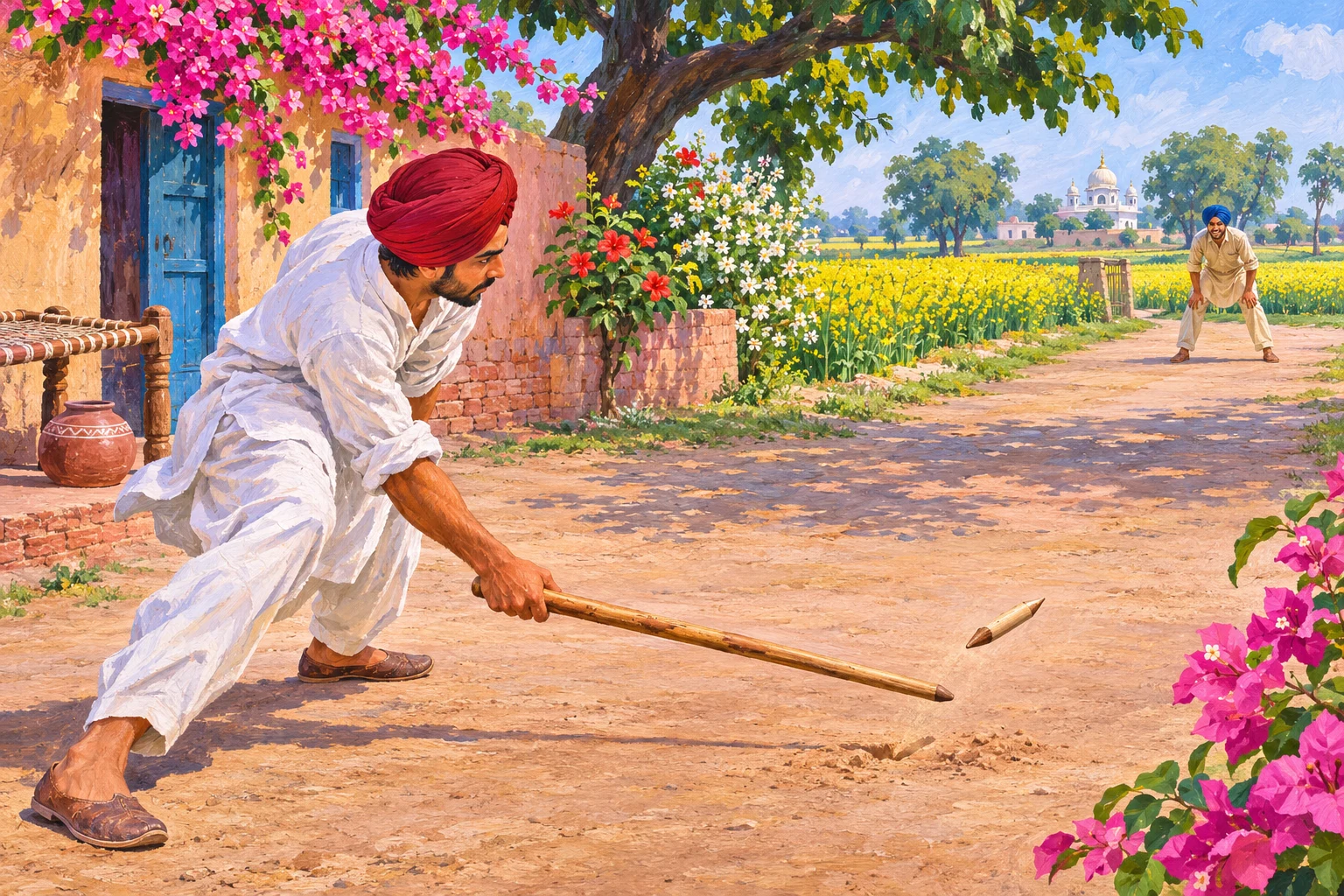
- One long danda and one short gulli
- setting
- Open ground with a clear striking area
Lamma danda ate chhoti gulli is khed da saaz ne. Gulli de sirre utte chot us nu hawa vich chukkdi ae; aggli maar us nu door lai jandi ae. Ik darj roop vich duji team catch phardi ae jaan danda naal faasla naapeya janda ae. Pakistan de guide vich kujh roopan layi daur ke muqarrar thaan tak pahunchna vi milda ae. Is layi friendly match ton pehlan catch, naap, vaarian ate daur di shart tai karo. Lakri udan karke khulla maidan te door kharre darshak zaroori ne. Lakrian banaun wale, shot de maqami naa ate naap utte hoi gall-baat vi yaad da hissa ne.
Pind te ilaqe mutabiq naa ate asool badal sakde ne. Apni riwayat sanjhi karde hoye thaan, samaa ate sikhaun wale bande da naa daso. Tafseeli lekh de hawale vi parho; ajj di tabdeeli nu purani riwayat ton vakh pachhano.
Poora khoj lekh — English
Gulli danda begins with two pieces of wood: the longer danda and the short gulli, usually tapered so that a strike at one end can lift it. The player flicks the small piece into the air, then tries to strike it away. Getting the first motion right is a skill of its own; a powerful swing is useless if the gulli never rises cleanly.
The Traditional Games Federation of India describes a two-team version in which the fielding side tries to catch the airborne gulli. If it lands uncaught, distance can be measured with the danda to determine the score. Its guide also describes a limited number of attempts when a hitter cannot lift and strike the gulli.
The Pakistani traditional-games association documents another element found in some versions: a pre-agreed point that the hitter must reach before the gulli is retrieved. This difference is exactly why local rules matter. A family game built around a long-distance measure and one built around a running target can feel familiar without being identical.
Before a friendly match, agree on the striking spot, the catching rule, how distance will be measured, whether a run is required and when a turn ends. For a first practice, separate learning the flick from the full hit so that everyone understands the small movement that starts play. These are practical organising suggestions, not a claim that every Punjabi village used one standard code.
The flying wooden gulli needs clear space. Use an open ground with spectators well outside the swing and landing area, and keep play away from roads, windows and passing pedestrians. A remembered score is interesting; the local names of the shots, the carpenter who made the sticks and the argument over a final measure can tell the fuller story.