- Shayar
- Puran Singh
- Period
- 1881–1931
- Origins
- Salhad near Abbottabad, then British Punjab; now Khyber Pakhtunkhwa, Pakistan
Khulhe maidan, khulhe ghund, main nassdi!
— Puran SinghKhulhe Ghund, printed page 24 (digitised scan page 28)Kitaaban te rachnavan
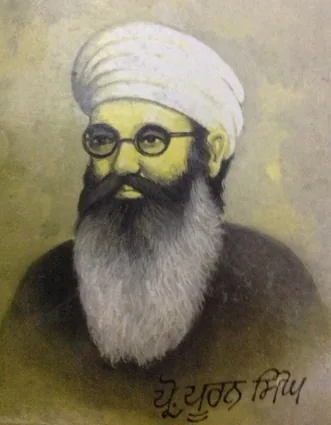
▤ Khulle Maidan▤ Khulhe Ghund▤ Khulle Asmani Rang▤ The Book of Ten Masters▤ The Sisters of the Spinning WheelPuran Singh 1881 vich Salhad kol janme, Lahore vich parhe ate Japan vich industrial chemistry di taleem lai. Unhan ne Dehra Dun vich forest chemist vajon vi kam kita. Vigyan, kudrat ate shairi unhan de jeewan de jurre paase san. Khulle Maidan, Khulle Ghund, Khulle Asmani Rang ate Khulle Lekh vargian Punjabi kitabaan de naal unhan di Angrezi likhat vi ae. Digitised The Sisters of the Spinning Wheel asli ate tarjuma kite kam di milwi kitab ae, har Punjabi rachna da sidha badal nahi. Contents ton shuru karke vekho ke yaad, dharti, prem ate roohani soch ik-dooje naal kiven gall karde ne.
Eh Punjabi saar poore lekh wal jaan da pehla raah ae. Tafseeli Angrezi khoj, kitabaan de naa ate hawale hethaan ne. Kalam parhde jaan sunde hoye chhapi edition, tarjuman ate gaun wale nu vakh vakh pachhano; mashhoor hon naal har tuk di nisbat pakki nahi ho jandi.
Poora khoj lekh — English
Professor Puran Singh’s life does not fit a simple division between science and art. Punjabi University’s Encyclopaedia of Sikhism records his birth in 1881 at Salhad, near Abbottabad, family connections with the Rawalpindi area, education in Lahore and study of industrial chemistry in Japan. His wider career included work as a forest chemist at Dehra Dun. These locations place him within a mobile intellectual world rather than a single enclosed literary scene.
The university account describes the importance of Japan, Walt Whitman, Swami Ram Tirath and Bhai Vir Singh to his development. It also lists Punjabi works including Khulle Maidan, Khulle Ghund, Khulle Asmani Rang and Khulle Lekh, alongside English writing. Nature and a generous emotional range are prominent in the reference entry’s reading of his poetry. Scientific work and spiritual or literary searching were parts of the same life.
For an accessible primary starting point, the 1921 book The Sisters of the Spinning Wheel and Other Sikh Poems is available as a digitised text. Its title page describes the collection as original and translated work and credits Ernest and Grace Rhys with its introduction. That framing matters when comparing a poem with another edition: the book presents an English-language literary encounter, not a transparent substitute for every Punjabi text.
Try reading the contents page before selecting a passage. Ask how the book moves among memory, devotion, landscape and address, and notice the relationship between its introduction and the poems themselves. An English-speaking Punjabi reader can begin here without pretending that language of access is the whole tradition. Puran Singh offers an especially useful invitation for this site: curiosity about the land, scientific attention and a poetic response to the world can belong in the same conversation.