- Shayar
- Piro
- Period
- 19th century; died 1872
- Origins
- Exact birthplace is not securely established in the selected research
One indivisible master, they divide in two.
— Piro160 Kafis, kafi 18; translated by Anshu MalhotraKitaaban te rachnavan
▤ Ik Sau Sath Kafian / 160 Kafis▤ Siharfi SanjhiPiro di wafat 1872 vich hoi. Unhan di pachhaan Ik Sau Sath Kafian de naa wali Punjabi aap-beeti naal khas taur te jurdi ae. Jeewan bare azad jaankari seemat ae; matan di zor-daar awaaz nu poori tasdeeq-shuda jeewani nahi manna chahida. Unhan di likhat Guru Gulab Das ate Gulabdasi dere naal rishta dasdi ae ate apne chon de gird takraar nu bayan kardi ae. Lagataar kafian vich aap-beeti da roop adabi tajurba vi ae. Unhan nu sirf vivaad jaan kise mel-milaap de nishan tak na ghatao. Puchho ke Piro aap ki dasdi ae ate baad de parhan wale ki jorhde ne.
Eh Punjabi saar poore lekh wal jaan da pehla raah ae. Tafseeli Angrezi khoj, kitabaan de naa ate hawale hethaan ne. Kalam parhde jaan sunde hoye chhapi edition, tarjuman ate gaun wale nu vakh vakh pachhano; mashhoor hon naal har tuk di nisbat pakki nahi ho jandi.
Poora khoj lekh — English
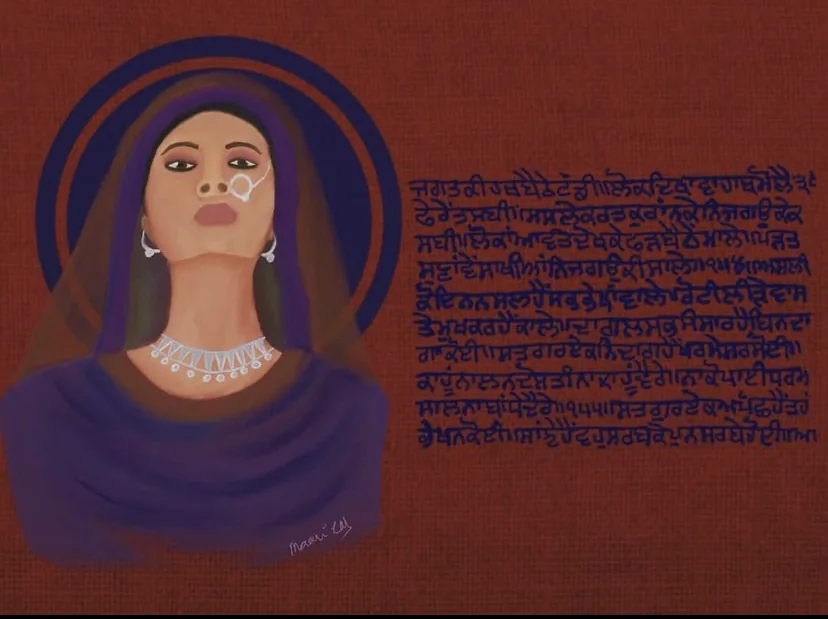
Piro, who died in 1872, is known above all through an extraordinary Punjabi autobiographical composition, Ik Sau Sath Kafian, or One Hundred and Sixty Kafis. Historian Anshu Malhotra’s introduction for Accessing Muslim Lives stresses how limited the independent information about her life remains. A powerful speaking voice in a text is not the same thing as a complete modern biography.
Piro’s account places her in relation to Guru Gulab Das and the Gulabdasi establishment in nineteenth-century Punjab. Malhotra describes a religious and cultural setting that drew on several traditions and a woman who narrates the conflict around her own choices. The profile’s importance lies in hearing that act of self-representation rather than reducing the writer to a scandal, a label or a symbol of uncomplicated harmony.
Piro also changes what the kafi can do. Literary research by Latif and Akhtar reads her long, connected composition as an innovation that brings autobiographical narrative into a form often associated with shorter Sufi poems. Her work therefore belongs in a history of literary craft as well as in a recovery of a neglected woman’s life.
Malhotra’s 2014 paper on later representations of Piro asks readers to distinguish autobiography, devotional accounts, theatre and historical reconstruction. That is an excellent rule for approaching a writer who has acquired several afterlives. Begin with the scholarly introduction and the primary text it identifies, with a credited translation if needed. Ask what Piro tells us, what she leaves unsaid and what later readers add. A Punjabi literary room becomes richer when it can hold those questions open and recognise a woman making a forceful claim to her own words.