Umendra Dutt Kheti Virasat Mission de Executive Director ne. Jaitu te Faridkot naal juri eh sanstha kisanan layi baithkan, khet de daure te sikhlai da kam dasdi ae. Beej di sambhaal vich fasal da naa, thaan, mausam te us nu rakhan wale da tajurba ikathe rehnde ne.
KVM de apne programme vich puraniyan kisman labhna, beej ikatha karna, vadhauna te gharan vich sambhaalna shamil ae. Ehna tareeqeyan nu asal havale naal parho; purane, bina tareekh de ank ajj di ginti nahi manne gaye.
Poora khoj lekh — English
Umendra Dutt is identified by Kheti Virasat Mission as its Executive Director. From its base in Jaitu in Faridkot district, KVM works with farmers on ecological agriculture and the knowledge that supports it. Its own programme accounts describe field visits, farmer workshops and discussions about growing food. These activities make a useful starting point for understanding Dutt’s contribution: creating places where farmers can learn from one another and keep practical experience in circulation.
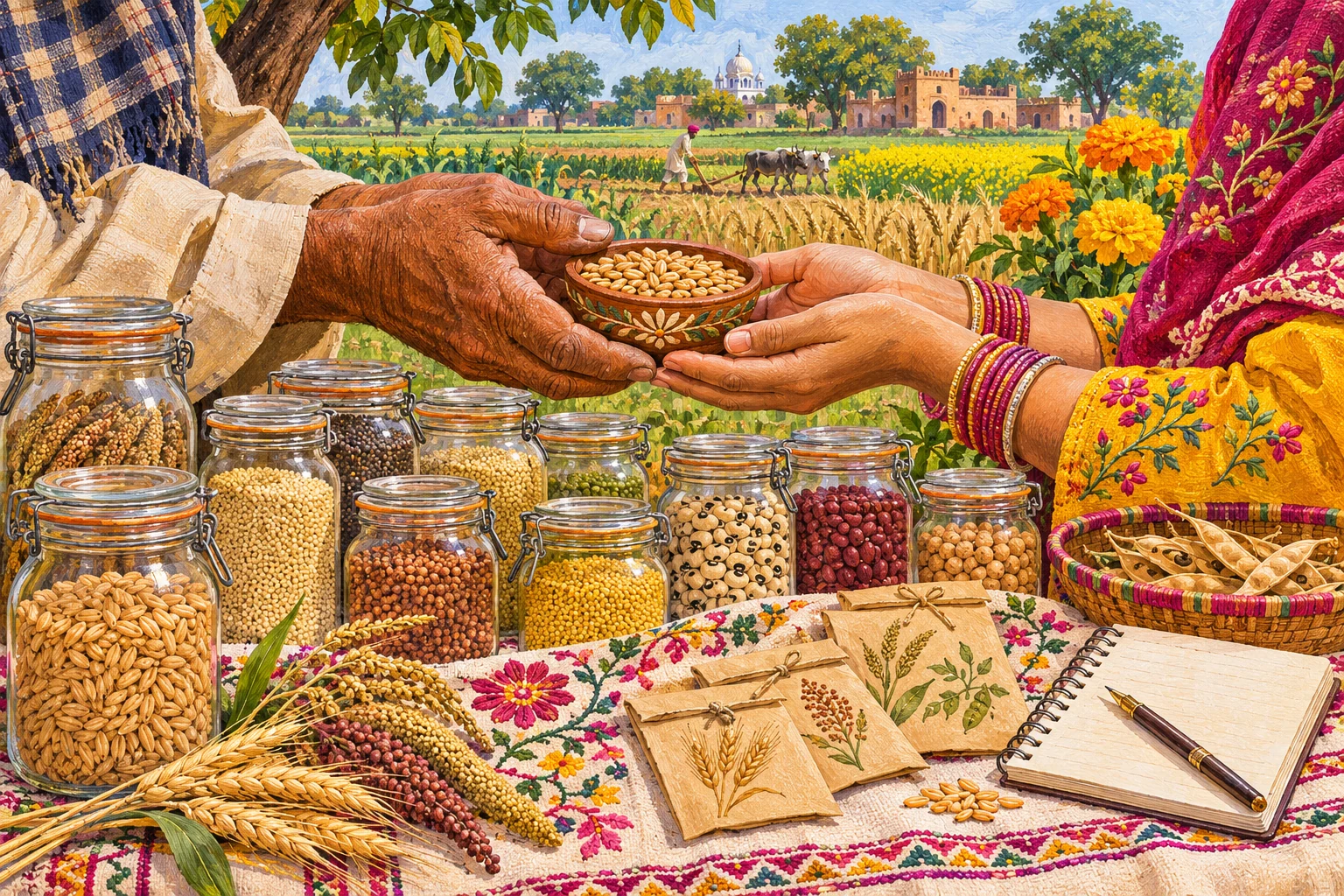
KVM’s seed-conservation programme begins with finding varieties and the people who know them. The organisation describes village mapping, sample collection, identifying crop characteristics, and helping farmers multiply and conserve seeds in their fields. Its workshops cover seed extraction, storage and ways of keeping varieties distinct. The programme also connects conservation with kitchen gardening and family seed banks, bringing the work into homes as well as farms.
A seed’s story includes more than its name. A useful record keeps the crop, keeper, growing place and season together, along with observations about how it behaves. Seen this way, conserving seed also means making room for the farmer who remembers when to sow it, how to store it and how a household uses the harvest. This is why agricultural knowledge belongs in a cultural reading room alongside songs, language and craft.
The linked programme pages are KVM’s accounts of its methods. Their undated participation totals are not treated here as a current count of farmers, seed banks or varieties. KVM also describes obtaining seeds from other Indian states, so a variety grown through its network should not automatically be called Punjabi in origin. Readers can follow the original accounts to distinguish the organisation’s stated approach from a separately measured result.