Bagh, pandit te giddar
Eh lekh Pakistan te India de Punjab de lokan, ohna diyan yaadan te sanjhe virse nu samajhan layi ae. Asal havale naal parho. Jithe koi gall hale tasdeek nahi hoi, ohnu pakka natija nahi keha gaya. Apne ilaqe da tajurba, thaan te havala vi sanjha karo.
Poora khoj lekh — English
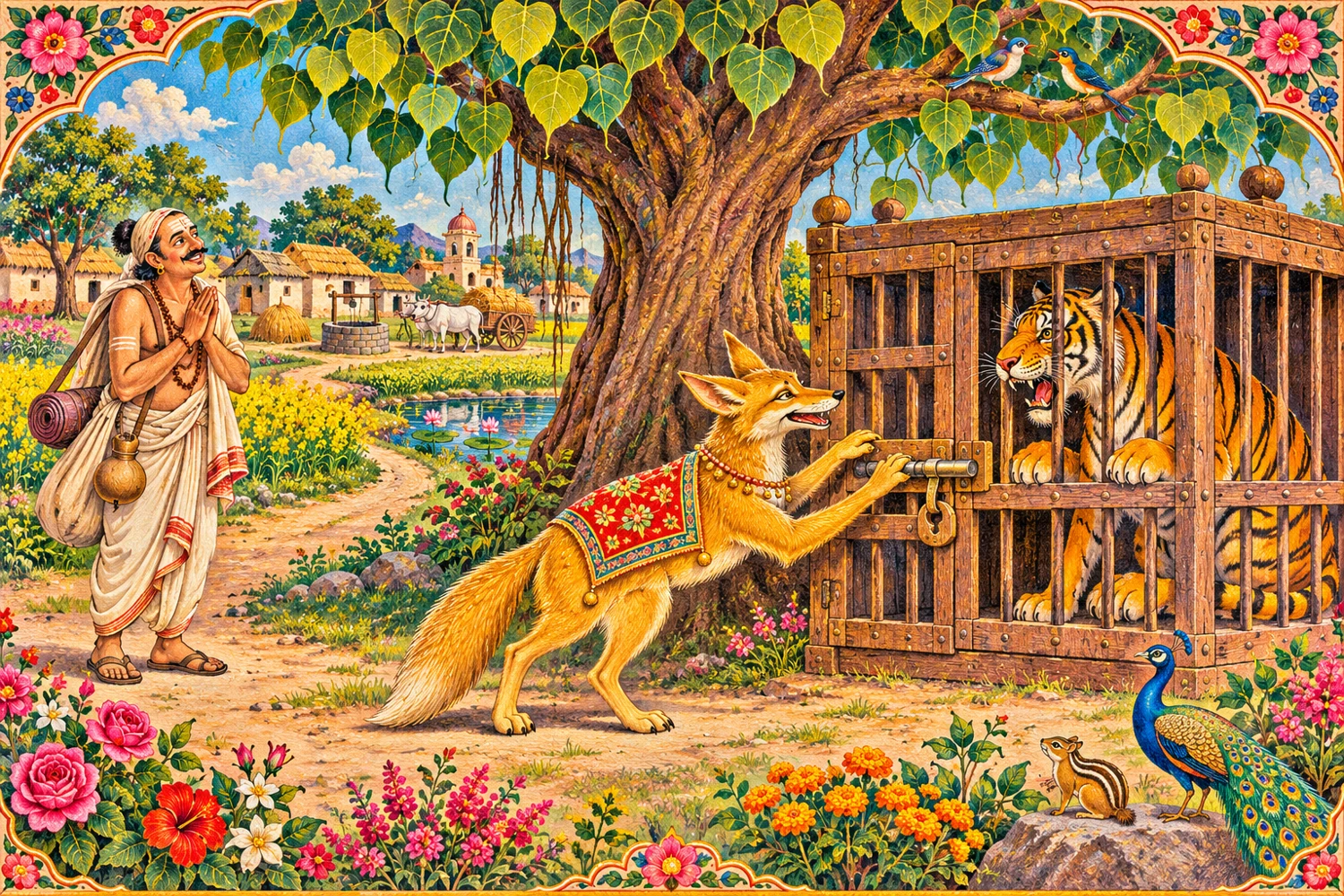
A traveller passes a tiger trapped in a cage. The tiger pleads for freedom and promises gratitude. Moved by pity, the traveller opens the door. Once outside, the tiger announces that hunger matters more than promises: it intends to eat the person who released it.
The traveller asks to seek other judgments first. A tree, a buffalo and a road describe how their usefulness has been repaid with mistreatment. Their bitter answers deepen the traveller’s fear. A jackal then appears and seems unable to understand who stood where when the trouble began.
The tiger grows impatient with the jackal’s questions and steps back inside to demonstrate. The jackal shuts the door. The story ends with the danger contained by cleverness, leaving listeners to discuss gratitude, trust and the difference between apparent foolishness and intelligence.
This is an original short retelling of a tale recorded in Flora Annie Steel’s late nineteenth-century Punjab collection. Versions circulate more widely in South Asia. It is shared folklore, not an account of a historical tiger or an event assigned to a modern country. Steel’s English editorial voice and colonial-era notes are not the anonymous storytellers’ unmediated words.