Chhota lela te dholki
Eh lekh Pakistan te India de Punjab de lokan, ohna diyan yaadan te sanjhe virse nu samajhan layi ae. Asal havale naal parho. Jithe koi gall hale tasdeek nahi hoi, ohnu pakka natija nahi keha gaya. Apne ilaqe da tajurba, thaan te havala vi sanjha karo.
Poora khoj lekh — English
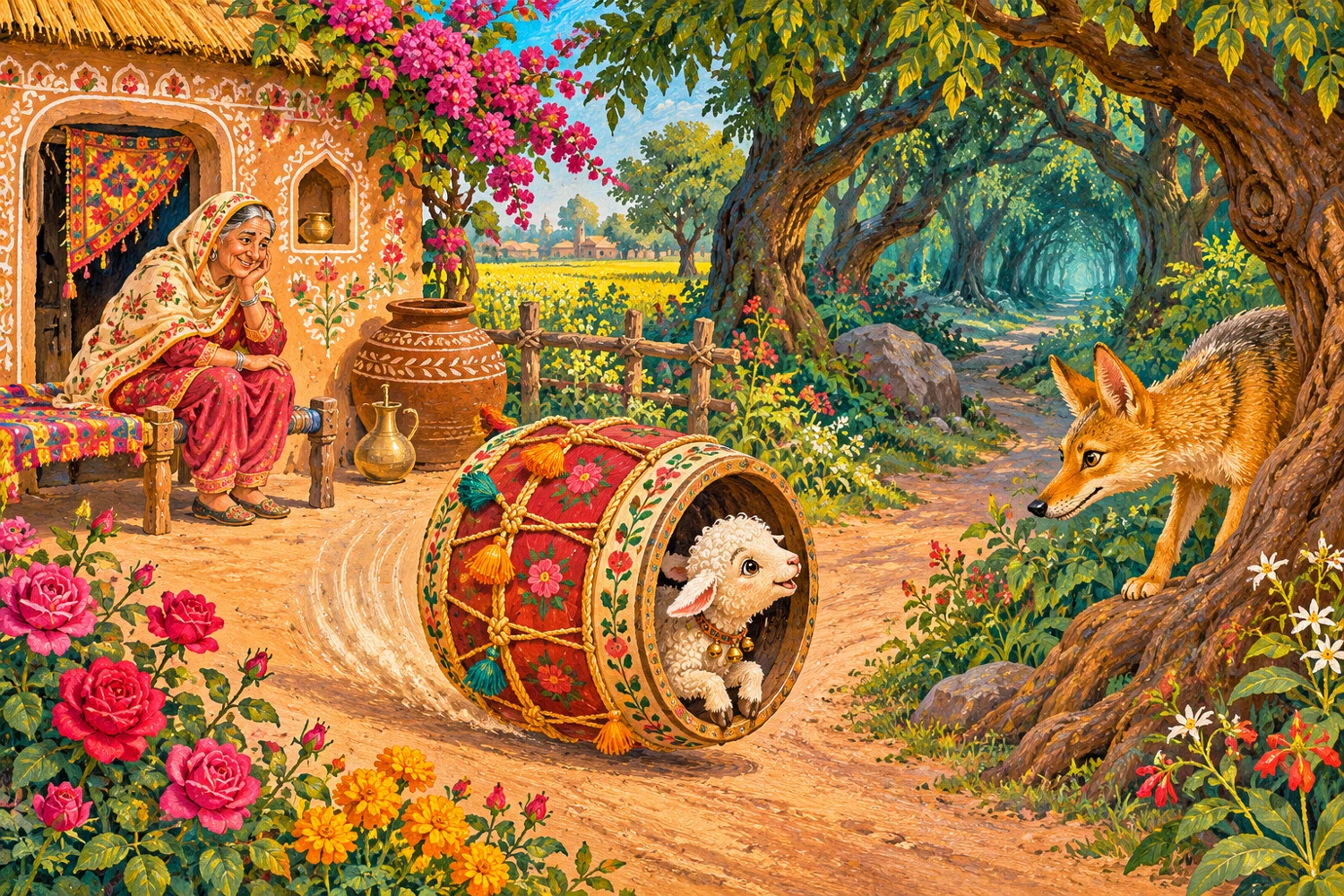
A little lamb sets out to visit its grandmother. Hungry creatures on the road want to eat it. The lamb persuades each to wait until after the visit, when it will have grown plumper. At its grandmother’s house it eats well, but the journey home now seems even more dangerous.
Grandmother makes a small drum in which the lamb can hide. The drum rolls down the road. When the waiting creatures ask where the lamb has gone, an unseen voice answers with a teasing song, and the little drum keeps rolling.
The jackal recognises the voice and breaks the disguise. Steel’s recorded version has a grim ending: the lamb is eaten. This short telling retains that ending instead of quietly replacing it with a modern happy one. Families may choose a gentler adaptation, but it should be identified as an adaptation.
The tale is documented in Tales of the Punjab. Its repetition and spoken rhythm suit oral performance across Punjabi-speaking communities. No particular contemporary village is established by that source. Tell us the title and ending your elders used, and identify it as their oral version.