Baradari da naa baran khullhan wal ishara karda ae. Lahore di Wazir Khan Baradari de record vich har paase tin mehraab, kone de gumbad ate vichkaar kamra ditta ae; ik vadda gumbad hun maujood nahi. Eh imarat pehlan bagh de bandobast da hissa si, fer museum ate parhan di thaan vajon vi varti gai. Is nu sirf baharli shakl ton nahi, chhaan, raah, rang ate lokan de baithan de dhang ton parho. Purani imarat di thandak jaan paani-bachat da daava naap mangda ae. Nava sanjha vehra banaun layi eh sawaal chuno ke lok kiven milange, parhange ate langhange.
Eh Punjabi saar tuhanu poore khoj-lekh wal lai janda ae. Tafseel ate hawale hethaan parho. Je tuhade ghar, pind jaan muhhalle di yaad is naal jurdi ae, taan apna tajurba thaan te same de naal sanjha karo; nijji yaad ate tasdeeq-shuda tareekh nu vakh pachhano.
Poora khoj lekh — English
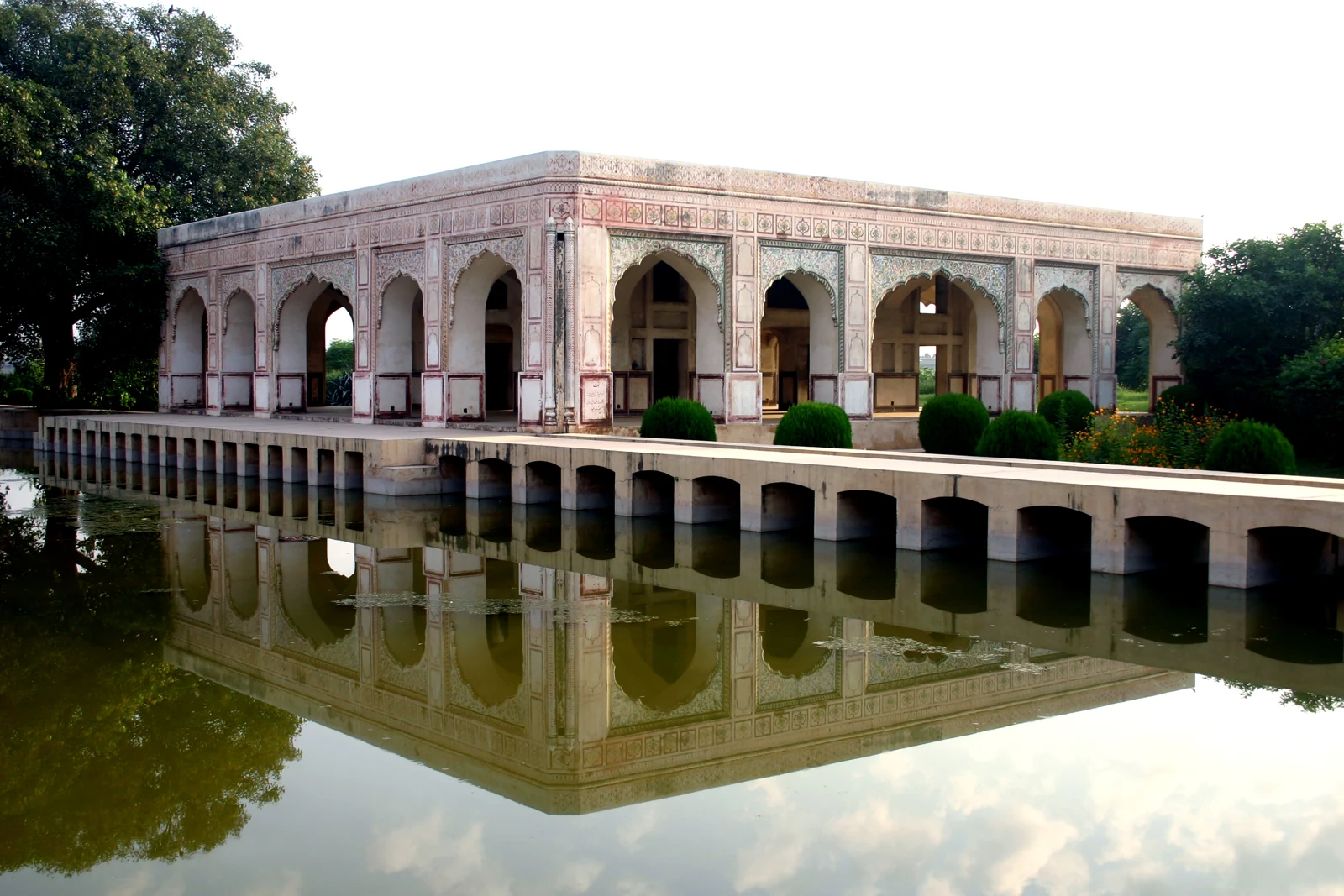
A baradari is a pavilion whose name points to twelve openings. Wazir Khan’s Baradari in Lahore makes that idea visible: the federal archaeology record describes three arched openings on each side, four corner cupolas and a central room surrounded by covered spaces. It also records a high dome that has disappeared. The building’s surviving form is therefore evidence of change, not a complete picture of its first appearance.
Lahore Museum places this pavilion at the centre of the Nakhlia, or date-palm, garden built by Wazir Khan in 1635. That setting matters. A pavilion was part of a designed landscape, with approaches, planting and open space around it. The archaeology record describes coloured fresco panels and notes that the garden itself has vanished. Looking at the monument alone can conceal the larger place it once helped organise.
The same museum history follows its later civic uses. During the nineteenth century the baradari accommodated museum collections, and it became associated with the Punjab Public Library as a reading room. Its story joins pleasure garden, administration, collecting and reading: several generations found new purposes for the same structure. Institutional accounts provide useful starting points, although precise dates for particular transitions should be compared carefully across records.
For a visitor, the most rewarding questions are concrete. How do the four faces differ? Which parts are sheltered? Where do traces of surface decoration survive? What does the current setting allow people to do? Shade and openness are observable features; claims about temperature or energy savings need measurements.
A new village gathering place can learn from that attention to space without pretending to be a copy of a Mughal monument. Begin with how people will sit, meet, read and move through it. Then involve skilled designers and local craftspeople. Punjab’s architectural memory lives in use as well as in its silhouette.