1984 nu ikko waqya samajh ke nahi parh sakde. June vich Indian fauj ne Amritsar de Sri Harmandir Sahib complex vich hathiyaarband kharkuan khilaaf Operation Blue Star kita. Larrai vich yatri, kharku te surakhya karamchari maare gaye, te pavittar imartaan nu bhaari nuksan hoya. Mautaan di ginti bare srotan vich matbhed ne. Indira Gandhi de 31 October nu qatl ton baad Delhi te hor shehran vich Sikhan nu nishana banaya gaya. Eh saare hamle Punjab de andar nahi hoye. Commissionaan te insani haqan diyan jaanchan ne sangathit hamleyan, siyasi hissa-dari te police di nakaami bare sawaal chukke. Har daave nu ohde srot te samay naal parhiye. Yaad da matlab dukh sunna, zimmedari saaf karna te kise poore mazhab nu virasati dosh na dena hai.
Poora khoj lekh — English
June: Punjab and Sri Harmandir Sahib
The year 1984 cannot be explained as a single episode. In the early 1980s Punjab experienced escalating political conflict and serious violence, including attacks on civilians by armed groups. In June 1984 the Indian government sent the army into the Sri Harmandir Sahib complex in Amritsar, often called the Golden Temple, in the operation known as Blue Star. Armed militants, including Jarnail Singh Bhindranwale and his followers, were inside the complex.
The fighting killed pilgrims, militants and security personnel and caused grave damage, including to the Akal Takht. The exact toll remains disputed. The UK government’s 2014 statement explicitly distinguished the official Indian figures from higher reported estimates. It is more responsible to acknowledge that dispute than to choose a dramatic figure without explaining its provenance. The loss of life and the violation felt at a sacred place remain central to Sikh remembrance of the event.
October and November: targeted anti-Sikh violence
On 31 October 1984 Prime Minister Indira Gandhi was assassinated by two Sikh bodyguards. In the days that followed, Sikhs were attacked in Delhi and other parts of India. These killings must not be described as though they all took place inside Punjab, nor as a continuation of the June battlefield. People were targeted because they were Sikh; victims included civilians who had no responsibility for the assassination.
The government-appointed Nanavati Commission and human-rights investigations examined organised attacks, political involvement and failures or complicity by police. Human Rights Watch’s 2014 account describes the violence as a pogrom and documents failures of accountability as they stood thirty years after the attacks. That report is a dated assessment, not a complete account of every later prosecution. Responsibility belongs to the perpetrators and institutions involved, rather than to a whole religious population.
The years that followed
Punjab’s later years of militancy and counterinsurgency produced further civilian suffering and allegations of grave abuses. That longer history deserves its own carefully sourced articles. Compressing it into a slogan leaves families invisible and makes it easier to confuse an allegation, a commission finding and a court judgment. Each should be identified for what it is.
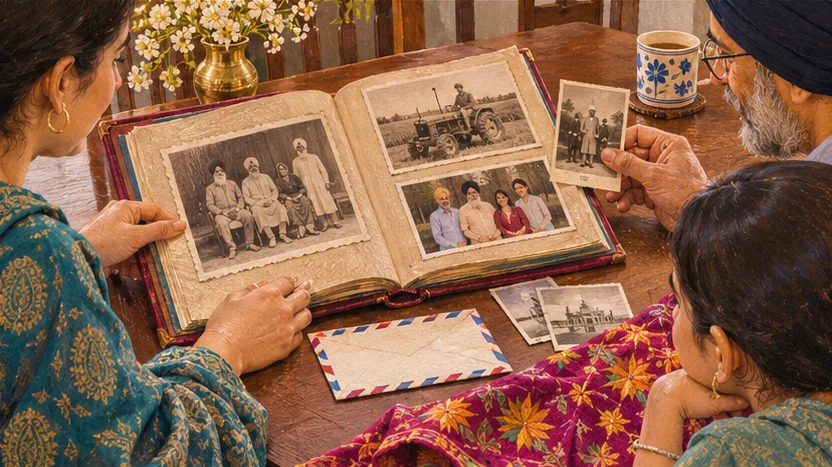
Historical precision also protects remembrance. A photograph should have a verified place and date. A first-person account should be presented as that person’s testimony. A government document should be attributed to its author and purpose, not treated as neutral simply because it is official. Where sources disagree, readers should be able to see the disagreement and follow the evidence.
A humane reading room
This page introduces a difficult history without graphic images. It is not an invitation to debate a survivor’s dignity or to assign inherited guilt to today’s neighbours. Family accounts may be offered voluntarily, with consent and editorial care, while factual explainers remain the responsibility of the editorial team.
Remembering 1984 means making space for grief, documenting wrongdoing and taking demands for justice seriously. It also means protecting the possibility of a different future. A shared Punjabi community can listen across national and religious boundaries while remaining specific about who was harmed, when, where and by whom. Compassion does not require vagueness; it becomes stronger when the record is handled carefully.