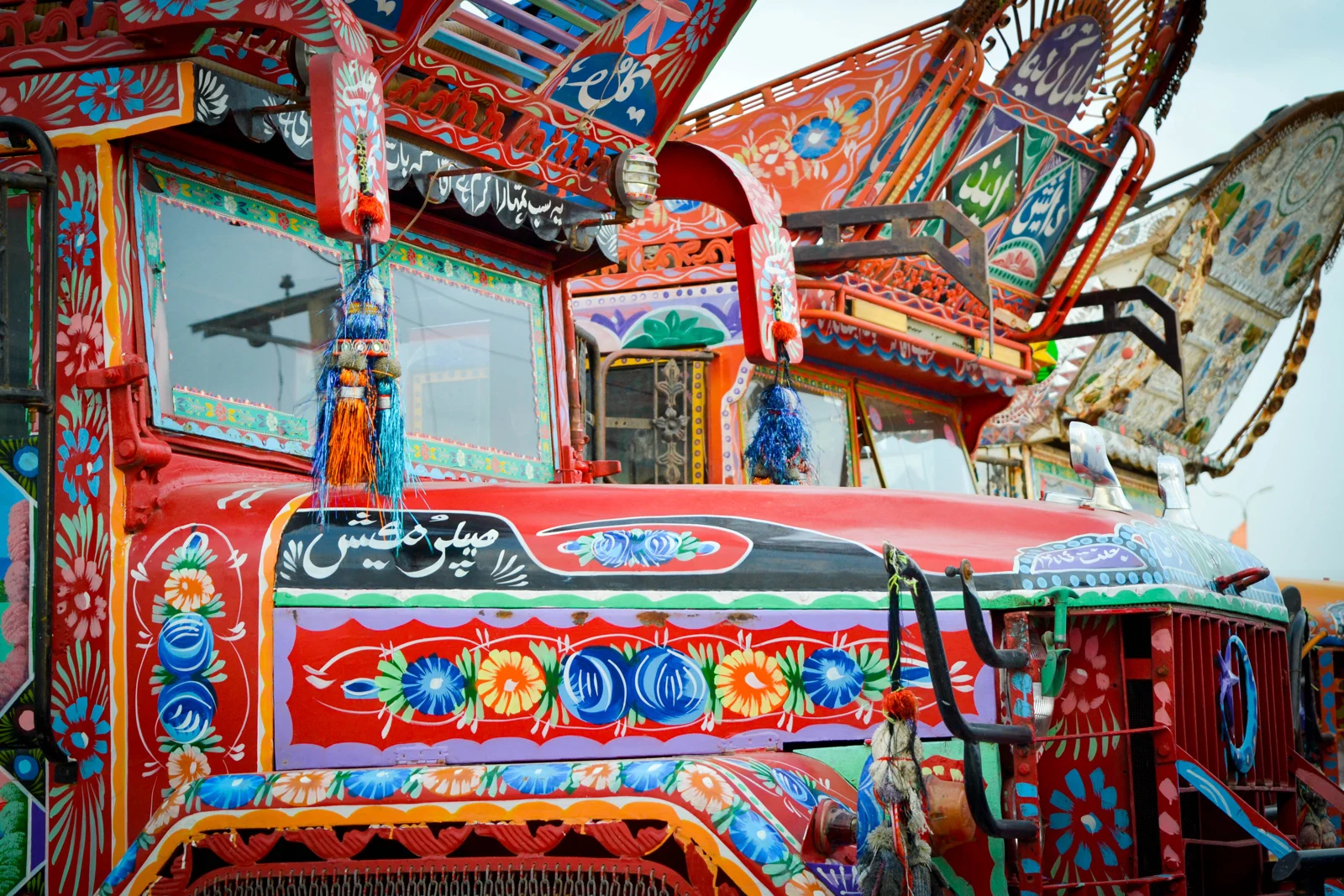
Sajeya truck kam karan wali gaddi vi ae ate malik di yaad, shauq ate bol di chaldi tasveer vi. Pakistani truck art de ilaqai workshop te andaaz vakh ne; is nu sirf Punjabi ijaad kehna tang gal hovegi. Paint de naal chamak patti, dhaat, sheesha ate nakkashi da hunar vi vekho. Smithsonian di 2002 di gaddi vich Jamil Uddin de dhaanche ate Haider Ali di painting de naa vakh darj ne. Ikk workshop di kahani puchho: design kis ne kita, malik ne ki mangeya ate panel kadon baneya? Ajj de kalakaar da kam benaam lok-pattern keh ke nakal na karo; rang de naal mehnat nu vi credit deo.
Eh Punjabi saar tuhanu poore khoj-lekh wal lai janda ae. Tafseel ate hawale hethaan parho. Je tuhade ghar, pind jaan muhhalle di yaad is naal jurdi ae, taan apna tajurba thaan te same de naal sanjha karo; nijji yaad ate tasdeeq-shuda tareekh nu vakh pachhano.
Poora khoj lekh — English
A decorated truck is still a working vehicle. Its surface, however, can also carry landscapes, portraits, flowers and poetry. USC Pacific Asia Museum’s 2014 artist programme describes Pakistani vehicle decoration as a dynamic folk art that celebrates local plants and animals, heroes, memories and words of wisdom. The Grand Trunk Road is one of the routes along which these moving compositions become part of everyday public life.
This is a Pakistani visual tradition with regional workshops and styles, not an exclusively Punjabi invention. In interviews documented by Atlas Obscura, artists distinguish differences in drawing, flowers and motifs between regions. Its Rawalpindi workshop example focuses on chamak patti, or reflective sticker work, showing why the category includes more than painting. Looking closely means noticing the material and the maker, not simply the brightness of the finished truck.
The Smithsonian’s 2002 festival vehicle offers a particularly well-documented collaboration. Jamil Uddin rebuilt a 1976 Bedford with steel, chrome, mirrors and ornamental parts; Haider Ali painted it. Naming both makers makes the division of skills visible. A painted panel and a shaped metal surround are different kinds of expertise working together on one vehicle.
International exhibitions have helped people encounter this work outside the road. In Pasadena in 2014, USC Pacific Asia Museum hosted Haider Ali painting a vehicle in public, with activities that connected Pakistani decoration to other traditions of personalising transport. That was a historical programme, not a current visiting opportunity.
For a Punjabi culture archive, a strong workshop profile begins with permission and a conversation: who designed this panel, who made its metalwork, and what did the owner request? Record the artist’s preferred name, place, technique and date. Do not copy a contemporary panel and present it as an anonymous folk pattern. Colour is part of the pleasure; the labour and individual imagination behind it are the deeper story.