Kamzor fasal vekh ke guaandhi wala amendment khareedan ton pehlan khet di mushkil pachhano. Laboratory di parkh layi numayanda sample, sahi gehraai ate crop-specific samajh zaroori ae. Nutrient di kami, namkeen paani ate nikaas di rukawat vakh masle ne; compost paun naal unhan di pachhaan nahi ho jandi. Laboratory kolon sample da dhang, bartan, miktar ate pahunchan da samaa puchho. Thaan, tareekh, pichhli fasal, sinchai ate pehlan payian cheezan likho. Report de unit maahir di samajh naal rakho. Kise badlaav magron use thaan nu fer vekho; mitti di bahali lagataar dekhbhaal ate saboot da kam ae.
Eh lekh gall-baat te sikhhan di shuruaat ae. Apne khet layi faisla mitti, paani, mausam, kharche ate maqami maahir di salah naal karo. Tajurbe di thaan, tareekh, fasal ate natije likho; ikk changi misaal nu har zameen layi pakka waada na samjho.
Poora khoj lekh — English
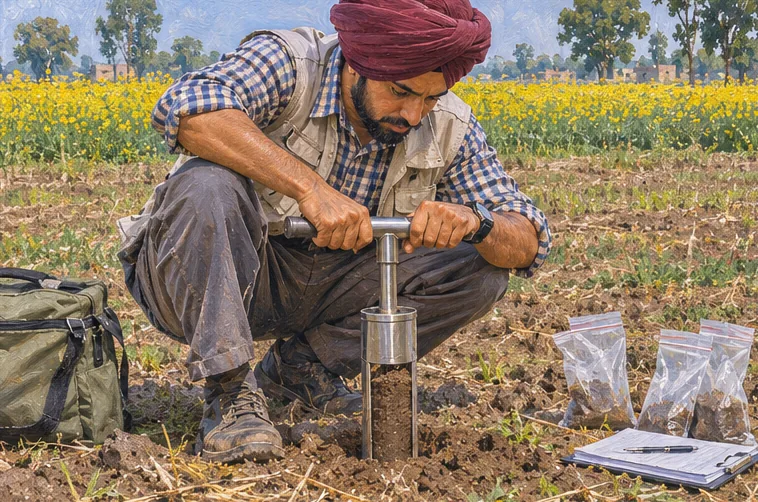
A struggling crop can tempt a grower to buy the amendment a neighbour used. The better first question is what is actually wrong with this field. Punjab’s technical service information distinguishes soil properties such as pH, salinity, organic matter and texture, and describes testing as a sequence: representative sampling, analysis, interpretation and a recommendation calibrated to the crop and field. A laboratory result is useful when those steps remain connected.
The Jhang Soil and Water Testing Laboratory describes services for fertility assessment, irrigation-water suitability and diagnosis of salinity and sodicity. It also offers guidance on collecting samples. This distinction matters: a nutrient problem, poor-quality irrigation water and a physical drainage constraint are not interchangeable. Adding compost or planting a tree does not identify which one is limiting a particular crop.
Punjab’s soil-survey description adds the landscape below the surface. A survey considers landform, vegetation or land use, soil layers, colour, porosity, texture and structure, with samples from the relevant horizons. A single handful from beside a path cannot stand in for that work. For an orchard, especially, the field’s history and subsurface conditions deserve attention before trees make the investment harder to reverse.
Ask the laboratory what sampling pattern, depth, container, quantity and delivery timing it requires for your question. Record the location and collection date, recent irrigation, crop history and any fertiliser or amendment already applied. Keep noticeably different patches identifiable rather than losing a problem area inside an unexplained average. The appropriate sampling plan should come from the laboratory or adviser who will interpret it.
When the report arrives, keep the units and the adviser’s explanation together. Ask what is deficient, adequate or excessive, which finding is limiting the intended crop, what improvement is realistic and when to reassess. Record any intervention and observe the same area again. Soil revival is a continuing relationship between evidence and management—not a universal recipe, a colour in a photograph or one product sold as a cure for all of Punjab.