Multan, Bahawalpur ate Khanewal de 2017 survey ne kaddu-parivaar di fasal uggaun waleyan di pollination bare jaankari parkhi. Apis dorsata ate Apis florea vargian jaan-pachhaan makhian ton hor desi makhian nu pachhaanna aukha si. Khoj ne maqami boli vich sikhya di lorh dassi. Jangli pollinator di rakhi ate commercial chhatte di sambhaal vakh kam ne. Lahore di training vich paltoo Apis mellifera vi aa sakdi ae; har chhatte nu desi kehna kaafi nahi. Record vich phull da naa, tareekh, thaan ate keere di tasveer rakho. Maahir kolon pachhaan ate crop-protection bare salah lao; wild colony chukkan di thaan observation sanjhi karo.
Eh lekh gall-baat te sikhhan di shuruaat ae. Apne khet layi faisla mitti, paani, mausam, kharche ate maqami maahir di salah naal karo. Tajurbe di thaan, tareekh, fasal ate natije likho; ikk changi misaal nu har zameen layi pakka waada na samjho.
Poora khoj lekh — English
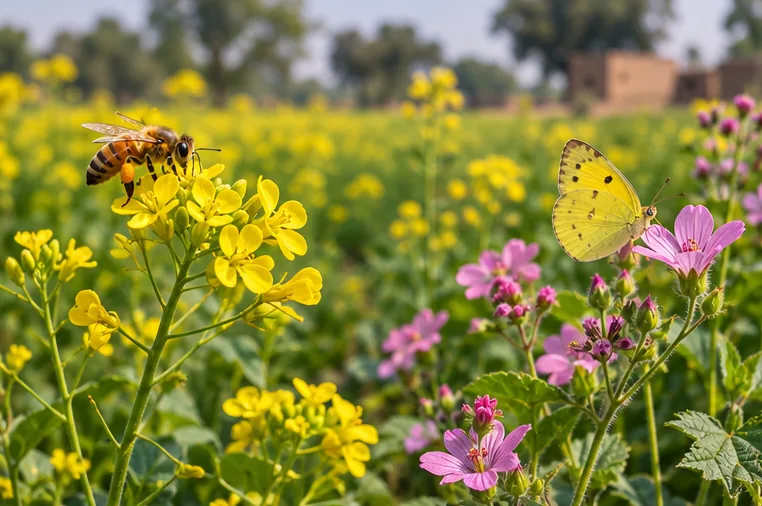
A field study in Multan, Bahawalpur and Khanewal surveyed cucurbit growers in 2017 about pollination. It distinguished familiar native honeybees, including Apis dorsata and Apis florea, from other native bees that many respondents found harder to identify. The study called for more local-language learning and conservation knowledge.
Conserving wild pollinators and managing a commercial hive are different tasks. Punjab’s research-station directory describes beekeeping advice and training, including work with domesticated Apis mellifera at Lahore. Ask what species is being discussed rather than calling every hive “desi”.
For a field record, note the flowering plant, date, place and visiting insect; request expert identification where needed. Talk to an extension specialist about flowering habitat and crop-protection practices. Share observations rather than collecting or transporting wild colonies.