Punjab ikko jeha ilaqa nahi. Nahri maidan, retli zameen te pahari pairan layi rukhan di chon vakh ho sakdi ae. Thal te Cholistan di sarkari jaankaari jand, van te frash da zikr kardi ae. Chichawatni da record purani kudrati banaspati di yaad vi sambhalda ae.
Pehlan puchho ke rukh kis kam layi launa ae: chhaan, hadd, chaara, lakkar, panchhiyan da ghar jaan kudrati ilaqa mur sanwaaran layi? Local naa de naal scientific naa vi jaano. Nursery kolon boote di pachhaan, srot te sehat puchho. Har jania-pachhania rukh har pind da kudrati rukh nahi hunda.
Vadde rukh di chhaan te jarran layi thaan chhaddo. Deewar, naali, raah te fasal naal ohda rishta socho. Paani den, pashuan ton bachaun te sukke boote badlan di zimmedari tai karo. Laun wale din di tasveer de naal agli garmi te agli rutt da natija vi dikhao. Purane rukh nu bachana te munasib kudrati navin ug nu sambhalna vi revival da kam ho sakda ae.
Poora khoj lekh — English
Punjab contains more than one landscape
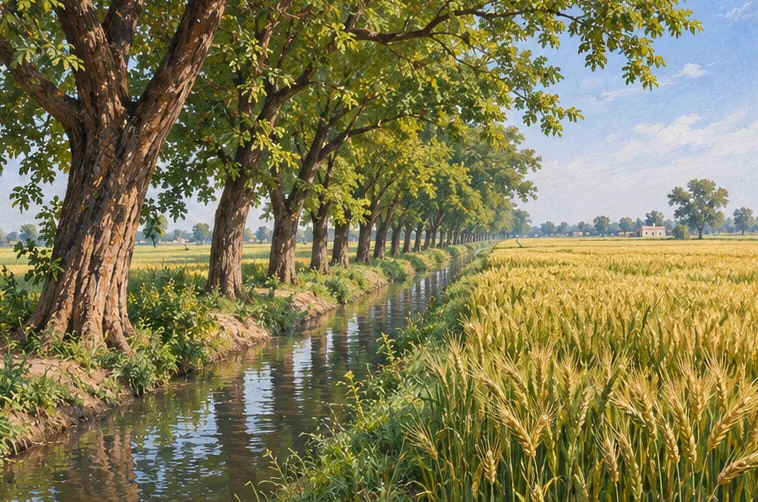
An irrigated plain, a sandy rangeland and a foothill farm do not need identical planting lists. Punjab's forest department identifies jand, frash and van in its desert-rangeland material. Its Chichawatni account records indigenous vegetation that preceded plantation development. These sources help recover a landscape's identity without assuming every familiar avenue tree is native everywhere.
Begin a planting story with the district, soil, rainfall or irrigation and the purpose of the tree. Is the goal shade for a meeting place, a farm boundary, fodder, timber, habitat or restoration of a local plant community? The purpose affects both species and placement.
Know the tree beyond its common name
A local name can refer to more than one species, and scientific names can change. The glossary therefore includes scientific identity beside English and regional names. Pakistan Forest Institute describes shisham or tali as a sub-Himalayan and riverine tree and documents kikar's occurrence in Pakistan, including Punjab.
Ask a nursery for the species and source of its planting material. A very fast-growing seedling is not automatically the best fit. Local provenance, health and suitability deserve attention. When native status remains uncertain, say so; a tree can be culturally familiar or widely cultivated without its exact ecological origin being established by that familiarity.
Place trees where they can mature
On a working farm, roots and crowns share space with crops, paths, buildings, irrigation and livestock. A tree suitable for an open village gathering place may be unsuitable next to a wall or small drain. Mark the expected mature crown and access route before planting, and allow for future maintenance.
Agroforestry research at PAU explicitly studies tree-crop interactions. That is a reminder to assess shade and competition rather than assuming every crop benefits equally beneath every tree. Boundary planting, shelter and mixed systems should be designed for the site. Avoid promising that a fixed number of trees per acre suits all farms.
The first seasons are part of the project
Our proposed tree record names the person responsible for watering, protection and replacement after planting. Record date, species, origin, location and survival. Protect young trees from browsing and damage using methods appropriate to the farm. A ceremonial planting photograph is the beginning of a story, not proof that a forest has been restored.
For community projects, visit again after the hottest period and after the following growing season. Show survival as well as losses. Planting fewer well-chosen trees with reliable care can give a more useful demonstration than announcing a large number with no maintenance plan.
Make room for memory and ecology
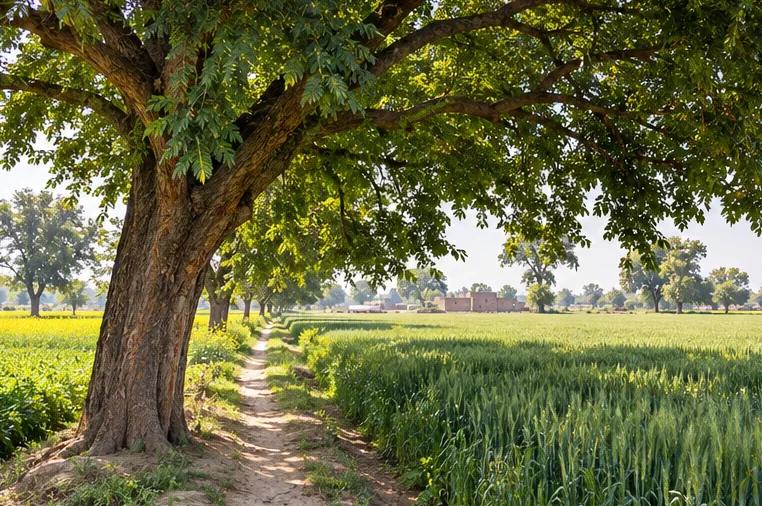
An old shade tree can connect family memory with a real habitat. Interview residents about who planted it, where people gathered and what changes they have seen. Keep the recollection separate from an unverified age claim. Photograph flowers, leaves, fruit and bark so that the species can be checked.
Revival can include protecting an existing mature tree, allowing suitable natural regeneration or restoring a locally characteristic mix. A farm needs food production and livelihoods as well as ecological care. The strongest tree project explains how these needs were balanced, then keeps checking the result after the enthusiasm of planting day has passed.