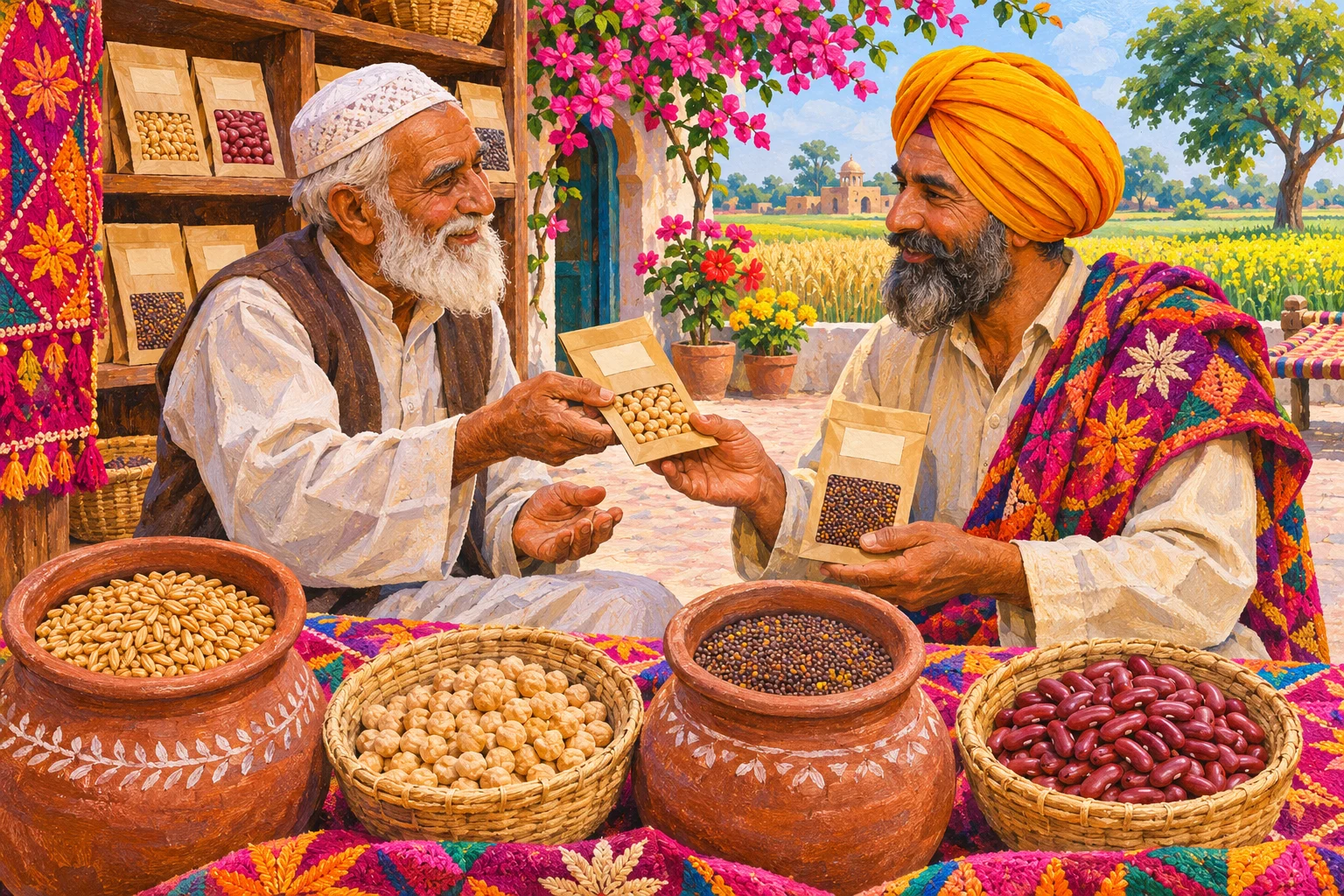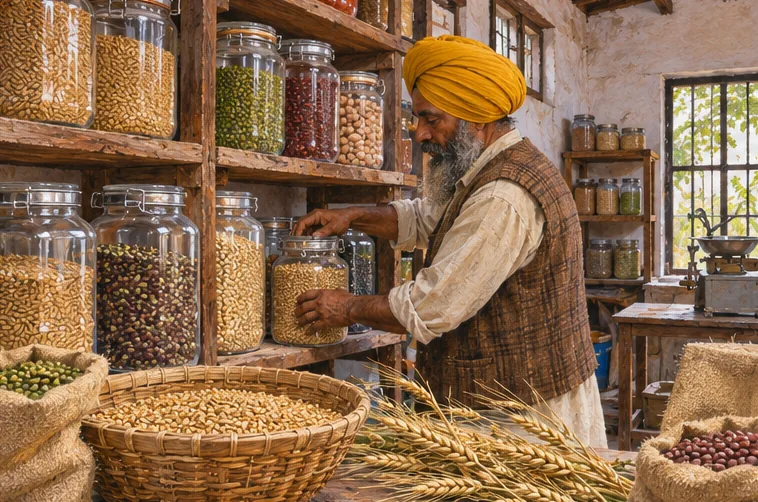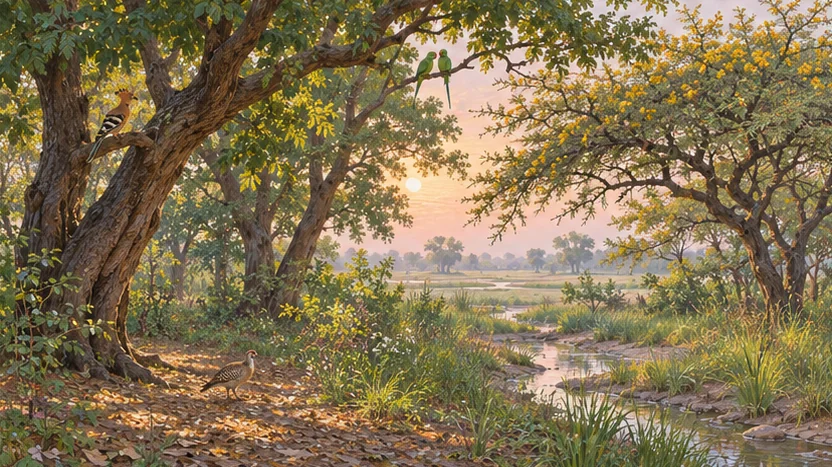
EcoSikh de programme desi species de microforest ate living seed bank di gall karde ne. Roundglass maqami mitti, mausam, community ate baad di sambhaal nu jorhda ae. Pakistan de Cholistan vich IUB da kam yaad karaunda ae ke registan, vehra ate nehar da khet vakh habitat ne. Ikko list har thaan na laao. Village tree record vich maqami ate scientific naa, beej da sarot, thaan da mahaul, laun di tareekh ate rakhwale da naa hove. Baad vich jeeunde paudian di ginti vi likho. Eh saade layi tajweez kita record ae, inhan sansthavan naal rasmi partnership da daava nahi.
Eh lekh gall-baat te sikhhan di shuruaat ae. Apne khet layi faisla mitti, paani, mausam, kharche ate maqami maahir di salah naal karo. Tajurbe di thaan, tareekh, fasal ate natije likho; ikk changi misaal nu har zameen layi pakka waada na samjho.
Poora khoj lekh — English
EcoSikh's Guru Nanak Sacred Forest programme documents native-species microforests and living seed banks. Roundglass Foundation describes a complementary model in rural Indian Punjab: choose trees for local soil and climate, involve the community, and continue watering, monitoring and care.
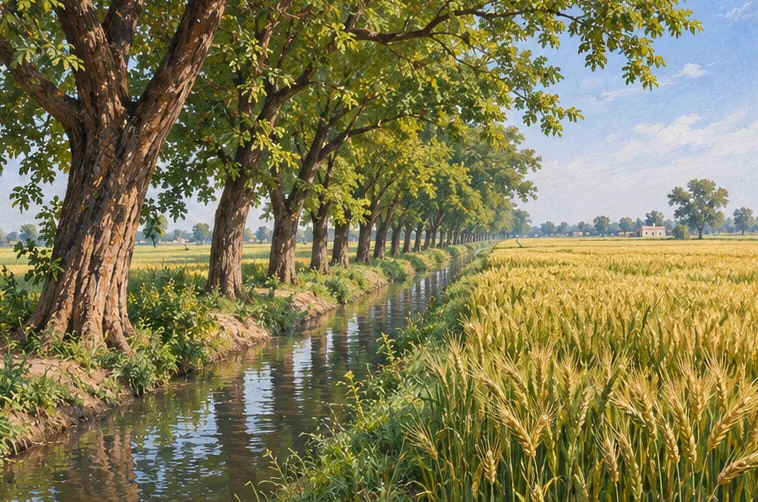
Across Pakistan Punjab, IUB's work in Cholistan shows why restoration cannot use a single planting list everywhere. Desert vegetation, a village courtyard and a canal-side field are different habitats.
A useful village tree record would include the local and scientific name, seed origin, habitat, planting date, custodian and later survival checks. This is a proposed recording method for SaddaPunjabiVirsa.com, not an existing partnership with these organisations.