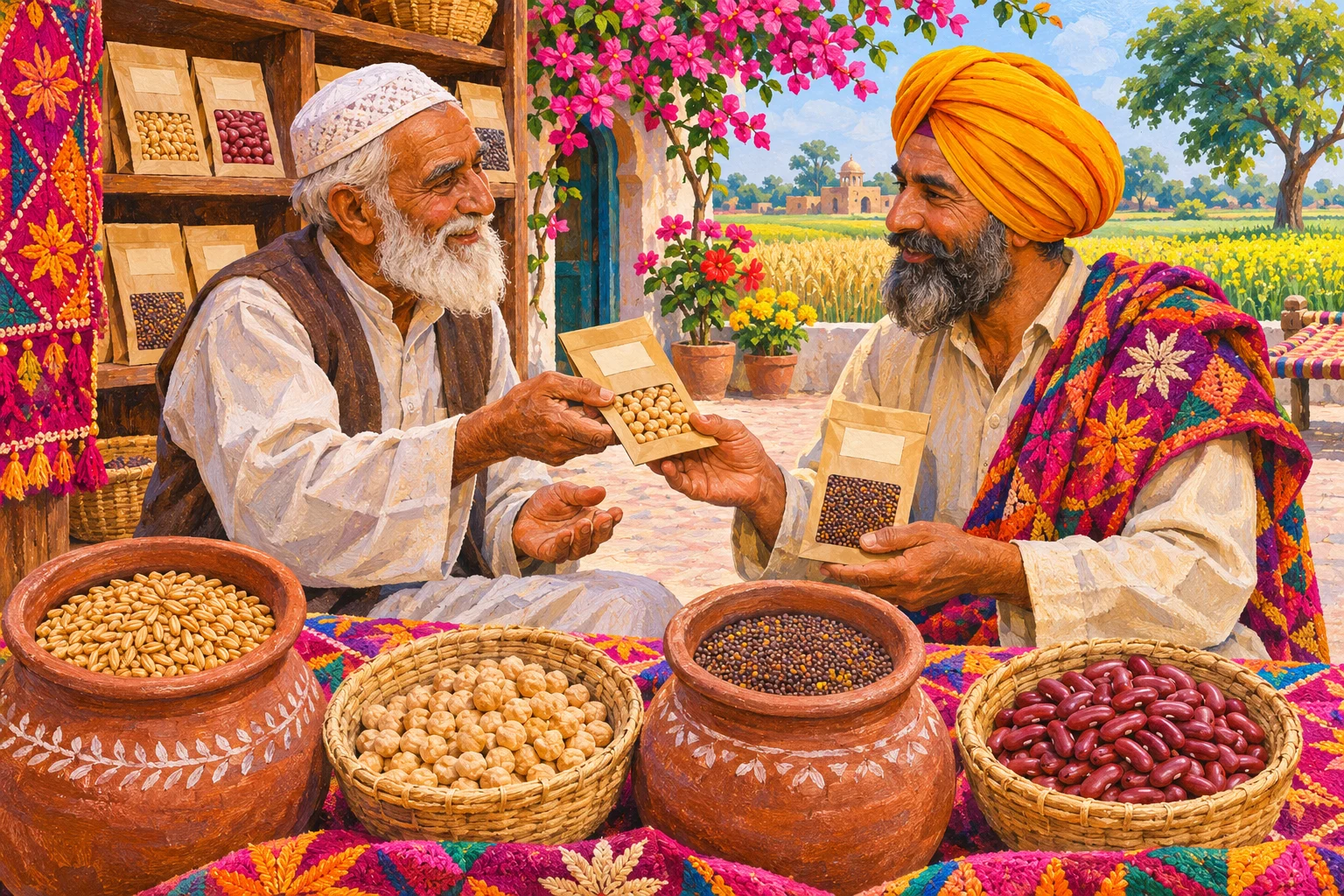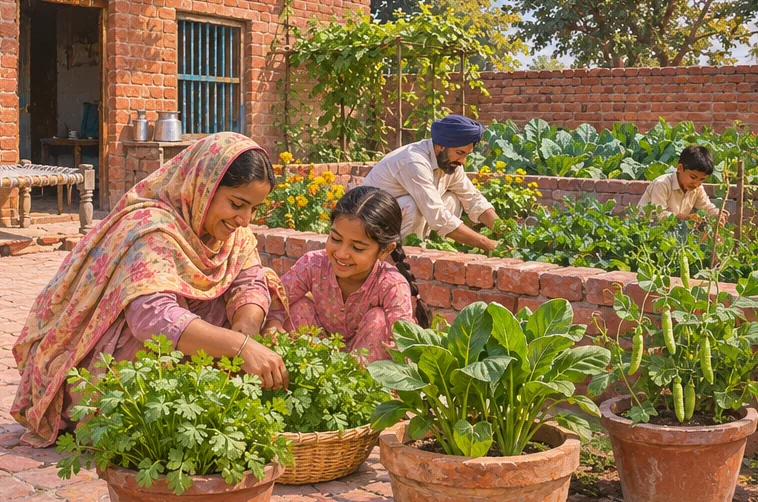
Ghar di baghichi di kahani vich fasal de naal lok vi ne. Kheti Virasat Mission auratan di garden design, keere di pachhaan ate beej-sambhaal wali sikhya dasda ae. PAU de 2026 programme bijai, faasle, paani ate paude di sehat bare taleem di misaal ne. FAO di Basti Arain wali purani report auratan di field-learning di gawahi dindi ae, ajj da khulla daakhla nahi. Kaun paani liaunda, beej chunda, keera vekhda ate pakaaunda ae? Sabh di marzi naal credit deo. Mausami diary vich bijai ton harvest tak mushkilan vi likho. Chhota vehra jaan grow bag vi jaankari sambhal sakda ae, bina organic certificate da daava kite.
Eh lekh gall-baat te sikhhan di shuruaat ae. Apne khet layi faisla mitti, paani, mausam, kharche ate maqami maahir di salah naal karo. Tajurbe di thaan, tareekh, fasal ate natije likho; ikk changi misaal nu har zameen layi pakka waada na samjho.
Poora khoj lekh — English
Punjab’s farming stories are also household stories. Kheti Virasat Mission’s kitchen-garden programme describes work with women on garden design, pest management and seed conservation. Its account traces the Women Action for Organic Farming and Rural Livelihood initiative to 2011 and describes a role for women trainers and coordinators. The history is useful; undated participation totals and promotional health claims should not be treated as a fresh independent evaluation.
There are recent extension examples as well. On 16 September 2026, PAU reported kitchen-garden awareness programmes at Pandori and Paramjitpur. Its account describes vegetable kits and practical guidance on crop selection, sowing, spacing, irrigation, nutrition and plant protection. Regular observation and correct identification of pests were part of the learning. A kit supplies material; the skills determine how a household uses it.
In Pakistan, FAO’s historical account of women’s farmer-field-school work at Basti Arain includes participant Ruqaiya Bibi’s experience of experimenting with vegetables and contributing to group discussion. The story is testimony within a programme report. It shows a form of learning worth documenting without making one woman’s experience stand for every family or claiming that the old programme is currently recruiting.
A strong household profile follows both the garden and the labour. Who selects the seed, fetches water, prepares the bed, notices disease, cooks the harvest and decides what is shared or sold? Ask each contributor how they want to be credited. A description that calls one person the farmer while treating everyone else’s work as invisible loses part of the knowledge it hopes to preserve.
Begin a seasonal diary with the space available, the crops chosen, their source and the people involved. Record sowing, flowering, harvest, difficulties and changes in how the produce is used. Include a family recipe where the cook agrees to share it. There is room here for a small courtyard, an urban grow bag or a village plot—each described honestly, with local advice and without pretending that home-grown food automatically carries a certification or a guaranteed health outcome.