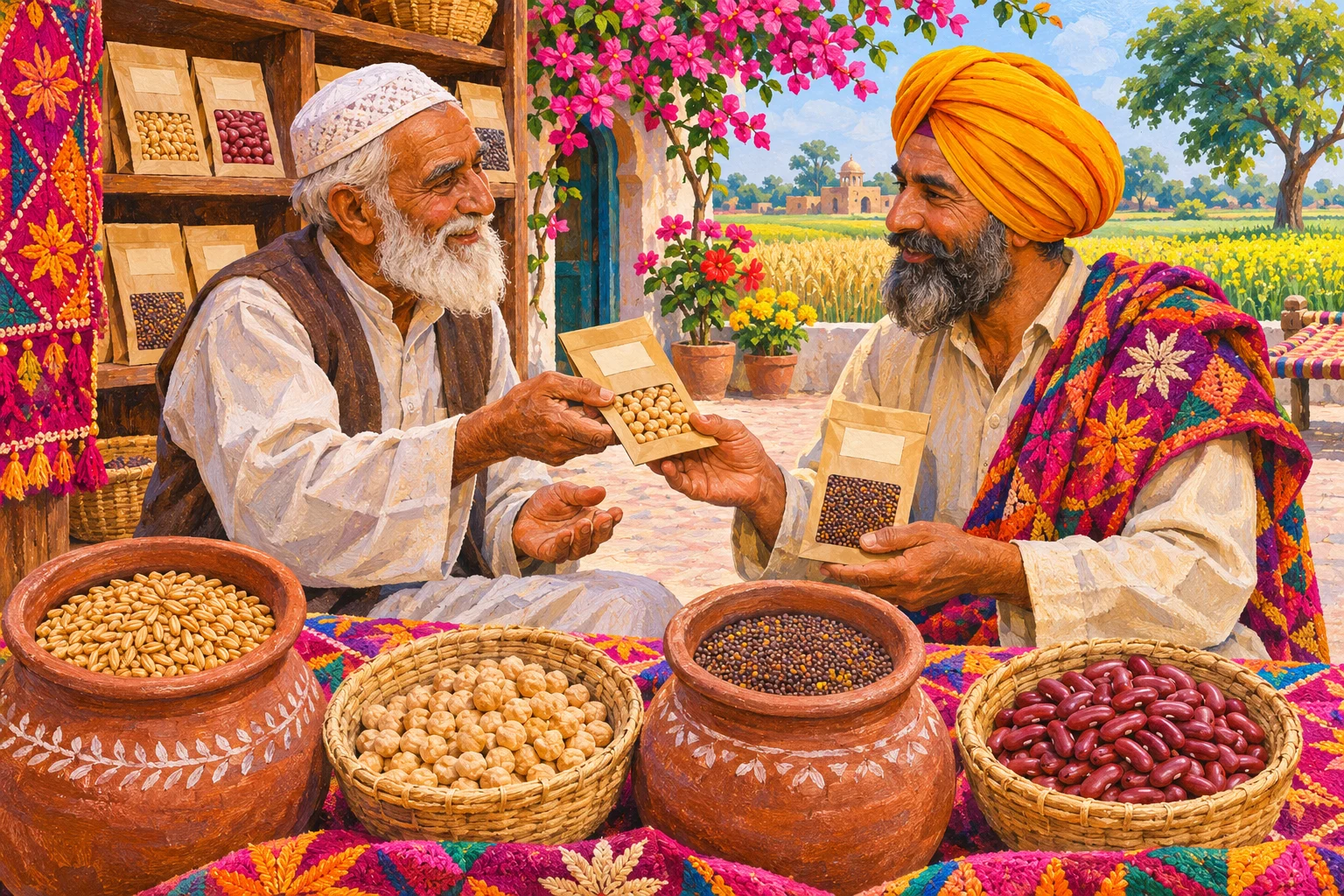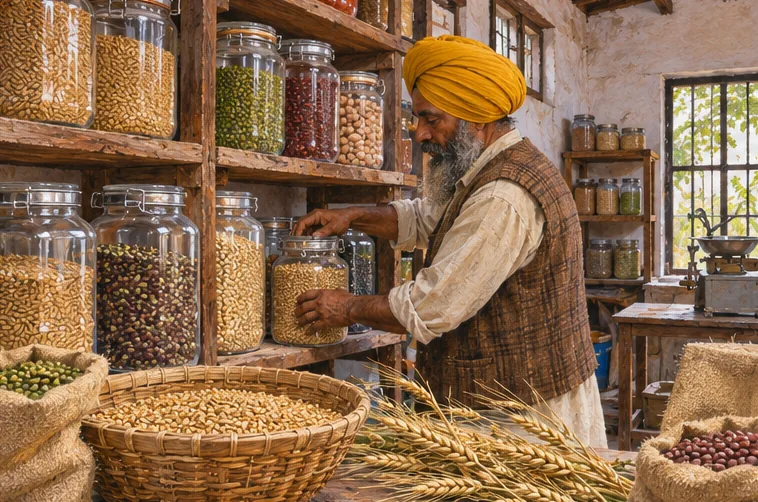
Beej bank sirf sohne dabbe te puraniyan pudiyan da naa nahi. Pehlan faisla karo ke kehri fasal sambhalni ae te kyon: swaad layi, ghar di yaad layi jaan apne khet vich changi chaldi kisam layi. Thode beej sambhalo, par har lot nu pachhaan te dekh-bhaal deo.
Packet utte fasal, kisam da naa, srot, pind, katai da saal te lot code likho. Notebook vich maape-paude, tasveeran, beej kaddan da tareeqa, storage te uggan di jaanch rakho. Khulle paragan wali fasal nu vi hor kismaan naal mel ton bachaan di lor ho sakdi ae. Har fasal layi paudian di ginti te faasla ikko nahi hunda.
Khaan layi tiyaar sabzi da beej hamesha pakka nahi hunda. Fasal mutabik sahi vele te sahi tareeqa sikho. Vandan ton pehlan sehat, pachhaan te beej de haq samjho. Do-tinn parivaar vakh thavan te hissa sambhalan taan ik maadi rutt vich saara beej ikathe mukkan da khatra ghatt ho sakda ae. Kamyabi de naal galtiyan da record vi rakho.
Poora khoj lekh — English
A collection needs a purpose
A cupboard full of packets can look like a seed bank while giving the next grower very little confidence. Start by deciding what the household wants to preserve: a distinctive vegetable, a grain connected with family food, or an open-pollinated crop that performs well locally. Keep the number manageable so that each lot can be observed and renewed.
Write down where each lot came from and what is known about it. Use a provisional name when the identity is uncertain. Keep any seller's label and record whether seed saving or redistribution is restricted. Seed heritage and variety rights can overlap, so an old-looking packet is not sufficient evidence of unrestricted rights.
Choose parent plants deliberately
Seed-saving guides distinguish between crops that mostly pollinate themselves and crops that cross readily. The seed producer needs to know the species, neighbouring crops and the isolation method before promising purity. A kitchen garden's eating crop and its seed crop may therefore require different planning.
Select healthy parent plants that represent the qualities worth keeping. Saving only the earliest or last plants can change the population over generations. Avoid recommending one universal number of parent plants or one isolation distance for every crop. Use a crop-specific guide and a local adviser where the seed will support other households' livelihoods.
Maturity is not the same as eating ripeness
A vegetable ready for the kitchen may not contain mature seed. Some crops need much longer in the field; others need another season before flowering. The work of growing a seed crop includes space, water, protection and a realistic collection date. It should be planned rather than improvised after the eating harvest has finished.
Seed Savers Exchange and university extension resources explain why extraction methods differ between fleshy fruits and dry-seeded crops. Use the appropriate method for the species. Drying is equally important, but it should protect seed quality; do not assume intense heat is a shortcut to safe storage.
Make a record that another person can use
Our suggested packet label includes crop, local or confirmed variety name, keeper, village, harvest year, lot code and storage date. A separate notebook can hold photographs, parent-plant notes, isolation method, germination checks and the quantity remaining. A simple lot code connects the packet to that longer record.
Store seed in conditions suitable for the species and check it periodically for moisture or pests. A small germination test before sowing gives more information than the age of the packet alone. Record the date and result rather than promising that every old seed will grow. If a lot performs poorly, renew it or seek a trustworthy replacement.
A village network adds resilience
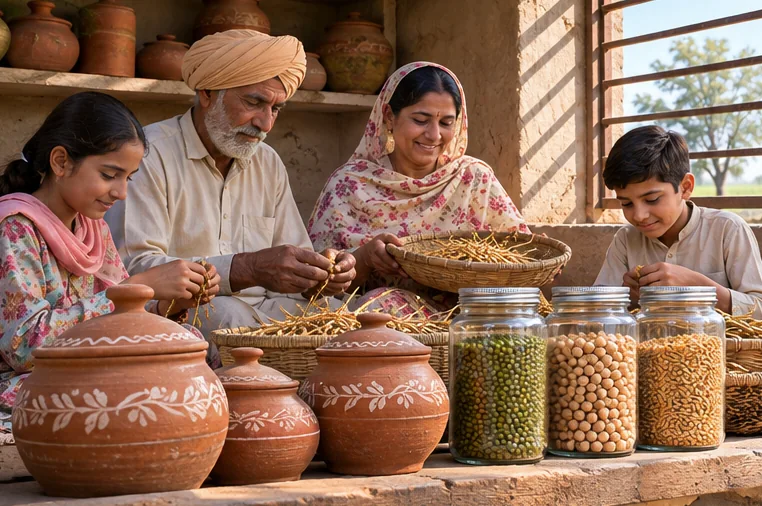
A family seed bank need not become an expensive building project. Kheti Virasat Mission describes family seed banks as part of its seed-conservation work; IFAD documents the importance of farmer and community seed systems. Our practical suggestion is to let a few responsible households keep separately labelled portions and agree who will multiply each crop next season.
Photograph and interview the keepers with consent. Record what succeeded and what failed, including disease or a mix-up in labels. This makes the website useful to the next gardener instead of becoming a display of attractive jars. The test of the seed bank comes when someone needs healthy, identifiable seed and can actually grow it.