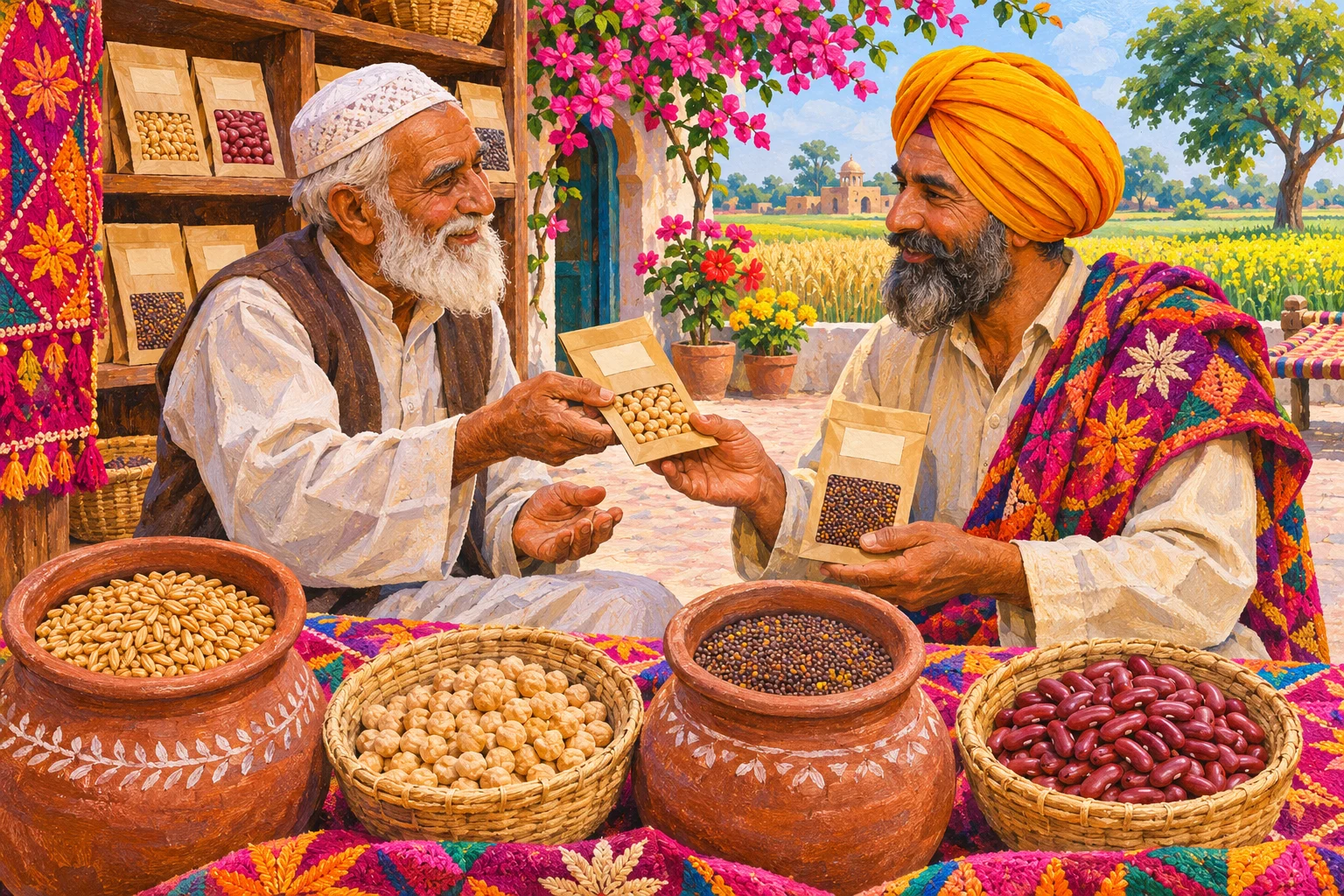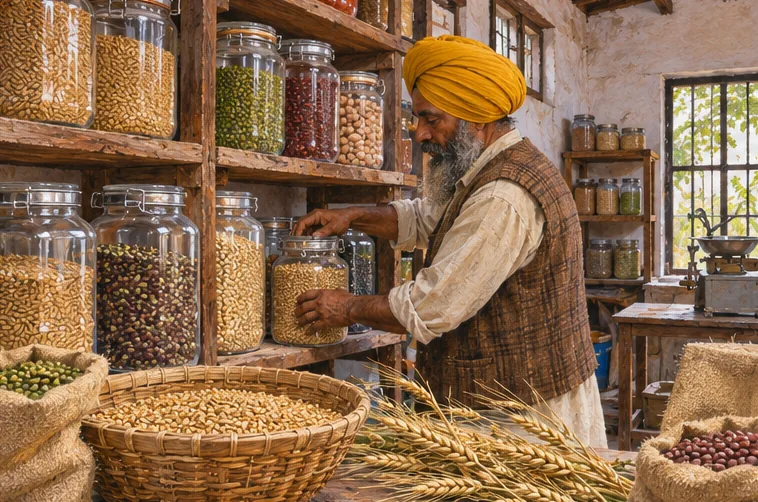
Kheti Virasat Mission pindan vich traditional varieties di mapping, beej rakhhan waleyan di talaash ate khetan vich conservation da kam dasda ae. Open-pollinated seed production, isolation, extraction ate storage sikhya da hissa ne. Desi keh dena variety da naa, Punjabi asal jaan gunwatta sabit nahi karda. Landrace, named open-pollinated cultivar ate hybrid nu vakh pachhano. Kisaan kolon puchho kithon milya, kehri mitti vich ugga, kadon harvest hoia ate ugghan di parkh kiven kiti. Eh record agle bande de sawaal changge karda ae; apne aap certification nahi. Ghar de beej di kahani vich rakhwale di marzi ate naa nu maan deo.
Eh lekh gall-baat te sikhhan di shuruaat ae. Apne khet layi faisla mitti, paani, mausam, kharche ate maqami maahir di salah naal karo. Tajurbe di thaan, tareekh, fasal ate natije likho; ikk changi misaal nu har zameen layi pakka waada na samjho.
Poora khoj lekh — English
Kheti Virasat Mission describes village-level mapping of traditional varieties, locating knowledge keepers, collecting samples and supporting farmers who conserve seed in their fields. Its training covers open-pollinated seed production, isolation, extraction and storage, alongside family seed banks.
An accurate seed listing should distinguish a landrace, a named open-pollinated cultivar and a hybrid. 'Desi' alone does not identify a variety, prove Punjabi origin or establish its quality.
Keep the grower’s experience beside the seed name: where it was grown, when harvested, what conditions it tolerated and how germination was checked. A clear record helps another grower ask informed questions; it does not certify the seed.