 Farming & seed keepers
Anjum Saroya: a desi-seed visit
A specific creator-published seed conversation. The formal name and impact of an “Apna Seed” project are not established.
Anjum Saroya: desi beej di gall
Eh lekh Pakistan te India de Punjab de lokan, ohna diyan yaadan te sanjhe virse nu samajhan layi ae. Asal havale naal parho. Jithe koi gall hale tasdeek nahi hoi, ohnu pakka natija nahi keha gaya. Apne ilaqe da tajurba, thaan te havala vi sanjha karo.
Poora khoj lekh — English
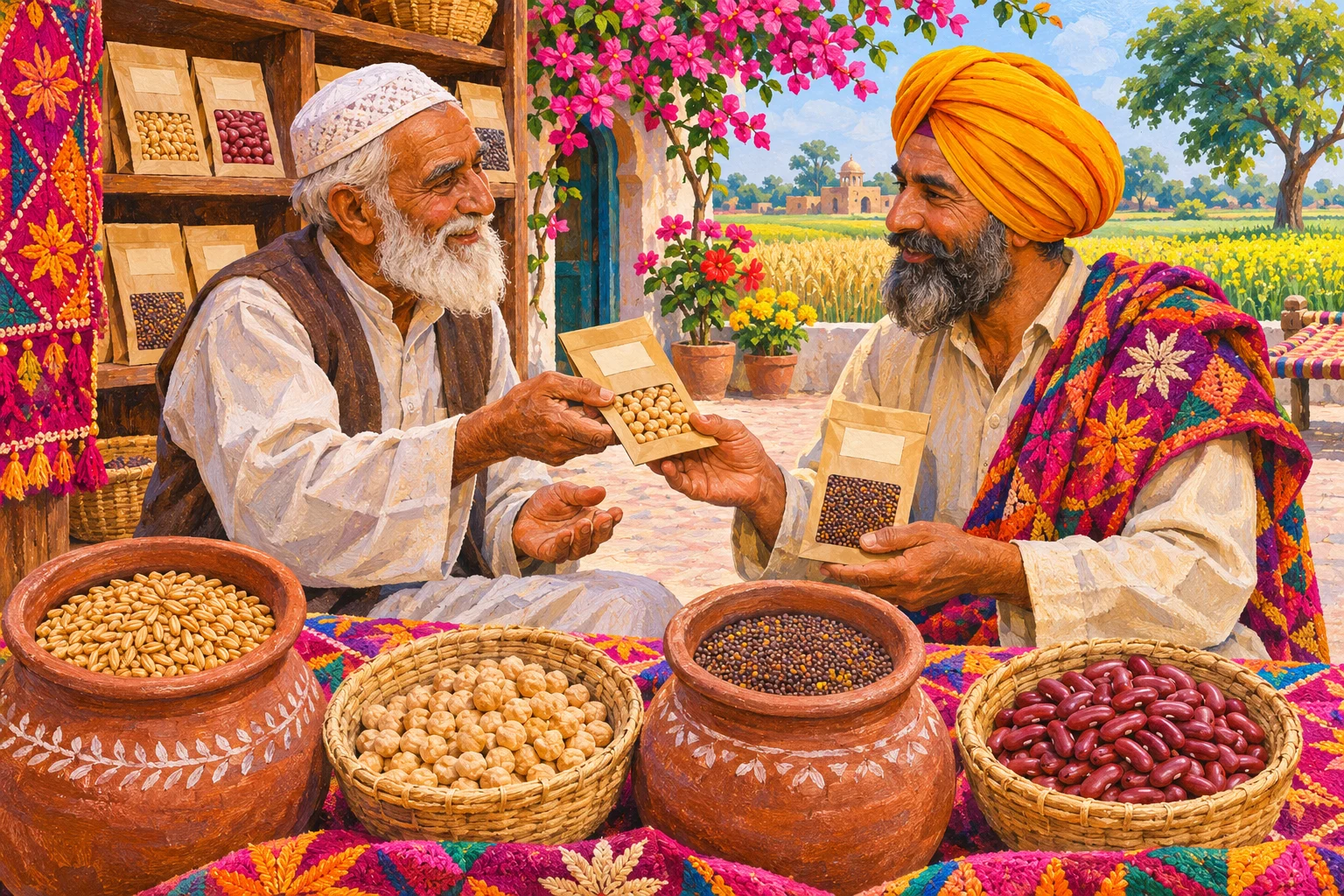
The public channel Anjum Saroya, @anjumsaroya1, publishes Punjabi rural-life and farming material. One upload is titled “Sabzi de beej laay | Faisal Kamboh dessi kanak ly k aya | Loosan da chata dita”, with video identifier waTNu0miQVg.
This is evidence of a particular public farming conversation. It does not independently establish the ownership, formal name or results of a programme called “Apna Seed”. The project name remains unverified pending primary documentation. The film title names Faisal Kamboh; it does not by itself establish the fuller identity Faisal Zubair Kamboh.
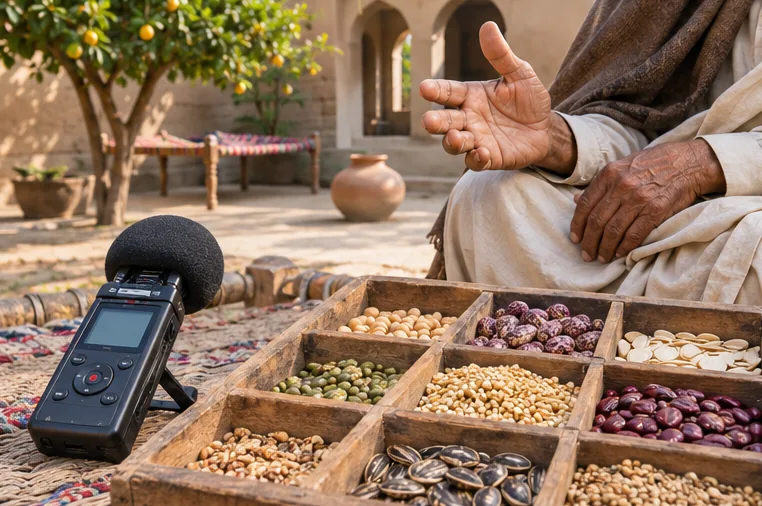
Follow the original film through Watch Punjab and keep the seed’s local name, crop, keeper and growing place together. Desi ancestry alone does not certify organic production or prove nutritional superiority. A detailed project profile needs an interview, dated examples, permissions for portraits and evidence of the seeds actually conserved.