Koi label kisaan di soch das sakda ae, khet da khaas amal jaan rasmi tasdeeq vi. Puchho ke is vaar kehra matlab ae. Kheti Virasat Mission zinda mitti, biomass di waapsi, vakh-vakh faslan ate farmer-held seed di gall karda ae. India vich APEDA ate PGS-India de verve standards, record, parkh ate mil ke zimmedari de dhang samjhaunde ne. Inhan de naa Pakistani khet layi apne aap qanooni certificate nahi. Khareedan wale nu uggaun wala, thaan, harvest ate daave di jaanch da pata hove. Tabdeeli di kahani vich fasal de naal mehnat, keere, kharcha ate mandi di mushkil vi likho; sirf tarif bharosa nahi banaundi.
Eh lekh gall-baat te sikhhan di shuruaat ae. Apne khet layi faisla mitti, paani, mausam, kharche ate maqami maahir di salah naal karo. Tajurbe di thaan, tareekh, fasal ate natije likho; ikk changi misaal nu har zameen layi pakka waada na samjho.
Poora khoj lekh — English
Words such as organic, natural and regenerative can describe a grower’s intentions, a set of field practices or a formal assurance system. A useful conversation asks which meaning is intended. Saying that a farm recycles its biomass tells us something specific about its management. Saying that a product is certified organic should lead to a named standard, a current scope and a way to verify the claim.
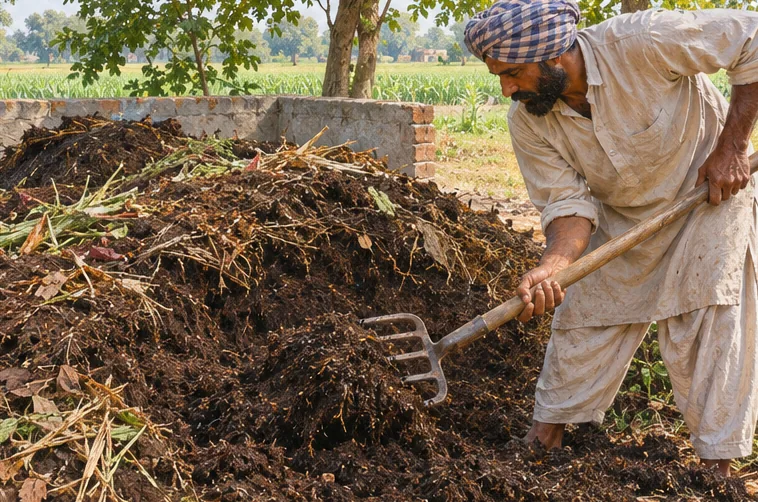
Kheti Virasat Mission describes an approach centred on living soil, biomass recycling, farm diversity, insect literacy and farmer-held seed. Those are aspects of the organisation’s regenerative-farming philosophy. Readers can learn from its practices without accepting every promotional claim about food, health or agricultural technology. A project’s values are part of its story; evidence of a particular field outcome is a separate question.
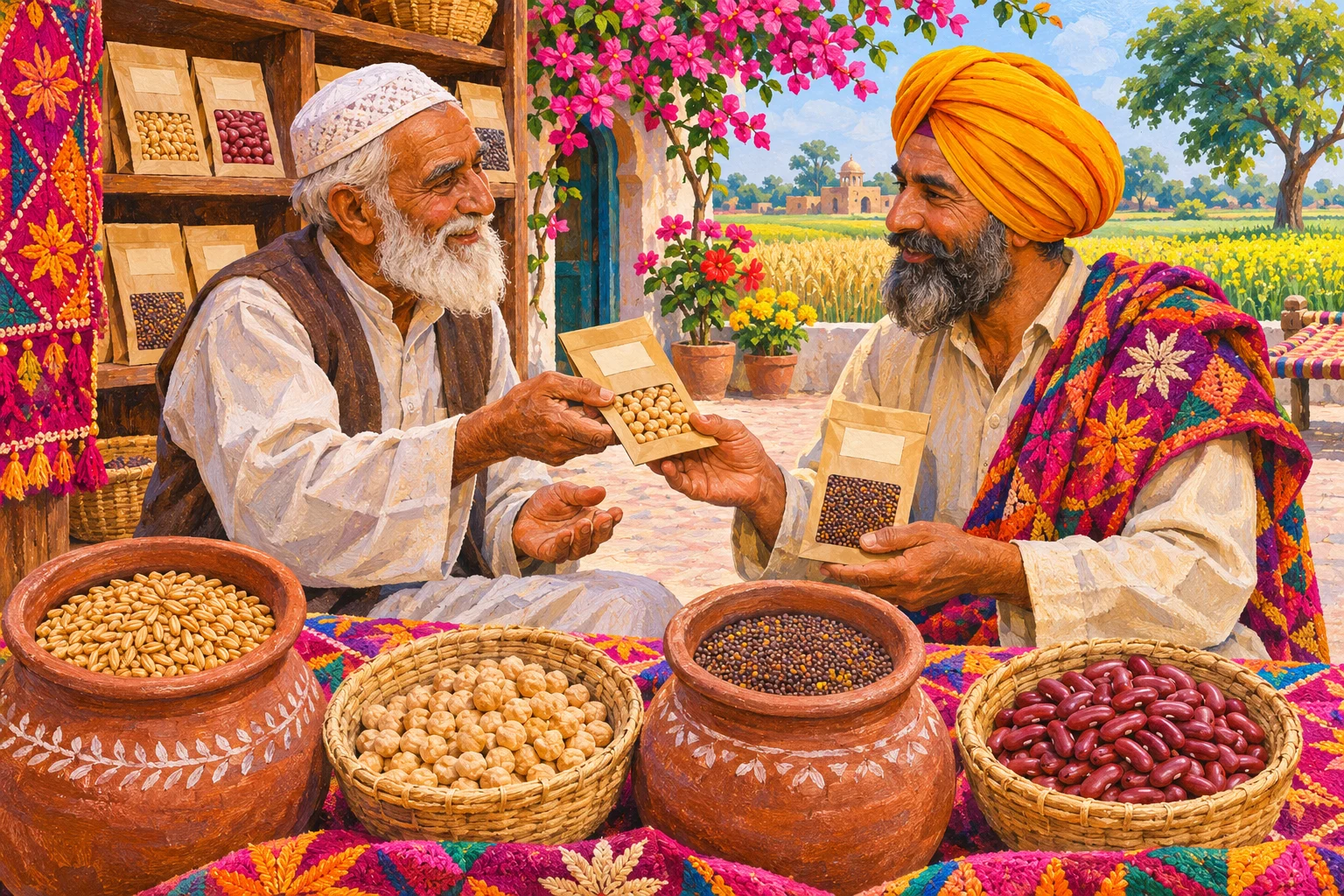
India’s APEDA explains two organic-assurance systems: the National Programme for Organic Production, associated with export certification, and PGS-India for domestic and local markets. Its guidance emphasises standards, records, an audit trail and separation of certified produce from other material. The PGS-India manual describes a participatory system based on active stakeholder involvement, peer assessment, transparency, shared learning and collective responsibility. It is an organised assurance process, not simply a farmer calling produce natural.
For buyers, useful questions include: who grew this crop, where and when was it harvested, which production claim is being made, and who checks it? For growers, a clear record of inputs, crop operations, harvest and sales makes a claim easier to understand. Requirements depend on the relevant market and scheme; Indian certification terminology should not be treated as a ready-made legal label for a Pakistani farm.
A good farm story can be honest about transition and uncertainty. Record what changed, over what area, during which season and at what cost. Include labour, pest pressure and marketing difficulties as well as successes. One vigorous vegetable bed or a testimonial is not proof that a method will give every farm the same yield, price or environmental benefit. Trust grows when the practice is specific and the evidence can be followed.